

I love gaming magazines. I grew up reading Nintendo Power and GamePro and occasionally picked up copies of EGM or Edge, poring over their pages to learn more about upcoming games, read interviews with developers, and feel a part of a community. As an adult, I became an editor at the same company that published GamePro; to this day, I apply those same editorial skills when publishing my own quarterly magazine, Juiced.GS.
With so much longform journalism having moved online, where it's inundated by ads and easy to overlook, I find myself still preferring print magazines. They're harder to come by these days, but one I've consistently been an ardent reader of for decades is Game Informer. Although owned by GameStop (another former employer of mine), I've never gotten the sense that the magazine serves to shill the failing retailer's products. I've enjoyed not only the reviews, but also the timeless in-depth features and retrospectives. So did plenty of other gamers: by 2013, Game Informer was the United States' most-circulated magazine behind only AARP, putting it well ahead of such familiar names as Reader's Digest, Good Housekeeping, and National Geographic.
Game Informer has made its share of mistakes over the years, including laying off many of its long-time staff. While this shift made room and opportunity for new voices to start their careers, I now sometimes find myself struggling with articles that can't find their thesis, or whose grasp of the comma is uncertain. However, even these foibles were outweighed by the delight of having gaming news delivered to my doorstep every month.
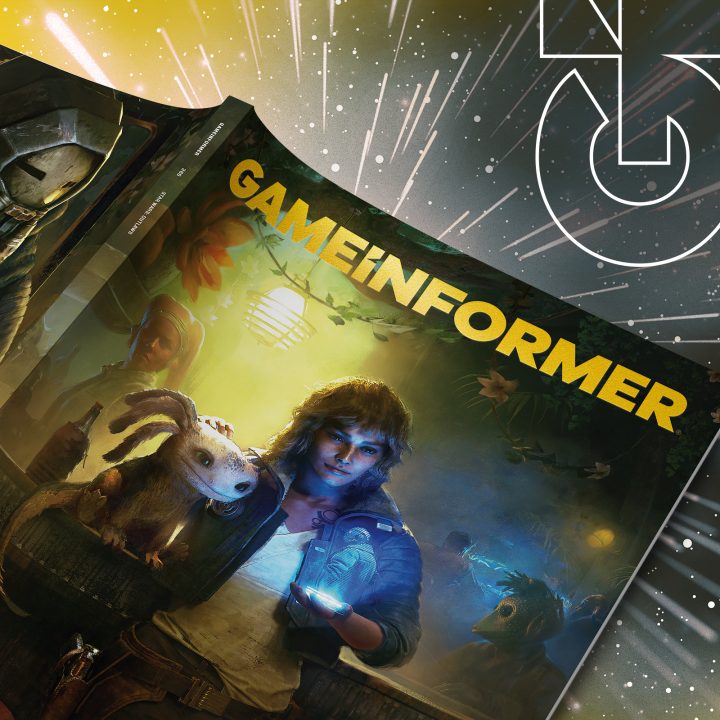
Game Informer's biggest mistake was made not by its editorial team, but by its publisher: a year or two ago, they eliminated the option to subscribe to the magazine by mail, which used to cost only $20/year. In an attempt to lure potential customers into GameStop, individual issues became available only in-store or online (where the cost of $7/issue was elevated by shipping and handling fees).
I ended up subscribing to GameStop Pro membership program for $25/year; it didn't include the magazine, but come with a $5 monthly coupon I could put toward buying each issue. But this minimal increase in cost also had a disproportionate increase in time and energy: finding a store that had the latest issue in stock and making the trek to pick one up was an exercise in frustration, especially when dealing with store managers who would cancel my orders before I could pick them up but then didn't know how to refund them. Nonetheless, I assumed I was alone in dealing with these travails, or that the change was an intentional step by GameStop toward the inevitable shuttering of the print edition.
So I was shocked and delighted last month when Game Informer posted one of the biggest mea culpas I've ever witnessed: a return to offering a print subscription.
I believe there's something special about a real physical magazine in your hands, filled with beautiful layouts arranged and planned each month to celebrate what we all love in the gaming hobby. We're betting big that many of you still feel that same way, even as you also enjoy all the other ways you connect to our content.
In recent months, it's sometimes been difficult to know how to get Game Informer in your mailbox, and for that, we apologize. Requests for an easy, no-frills way to get a print magazine subscription are (by far) the number one request we hear from you, and that's what we're delivering today.
Please consider supporting Game Informer with a subscription, and help us ensure there’s a place to discover this work for another 30 years into the future.
Matt Miller, "Announcing The New Game Informer Magazine Subscription"
The new price of $19.91/year for ten issues is an amazingly good price for the amount of content — about 84 pages per issue, or 840 pages per year. (That's only 2.3¢ per page!) Gaming journalism, like all journalism, is essential (yet also doesn't pay its staff much). Subscribing to Game Informer is an affordable and rewarding way to get your offline gaming fix while supporting an institution and its staff. I immediately signed up for a two-year subscription for $34.99 (a savings of 12%, or $4.83); whether you're a long-time reader or a curious newcomer to Game Informer, I encourage you to do the same.

After you're done reading each issue, what next? If you don't collect magazines, you may find it hard to keep your issues out of the recycling bin: most libraries don't accept donations of periodicals. Even the Video Game History Foundation won't take them — though they do have an alternative suggestion: "See if any of your local universities have a video game program and if they’d like to house them." (I have a prior arrangement to donate mine to The MADE, a non-profit video game museum in the San Francisco Bay Area.)
Of course, if there are other gamers in your life (perhaps the next generation?), a second-hand copy of a magazine can be worth its weight it gold, as it was for me when I was younger. It all starts with your subscription to receiving first-hand copies!
