
In 1990, I competed in the Nintendo World Championships, which was simultaneously a competition and a marketing campaign for Nintendo. Similar to E3 and PAX, the event was an opportunity for gamers to get their hands on the latest and upcoming games, with demo stations showcasing Final Fantasy, Super C, Solstice, Batman, and more.
Among the stations were multiple units of a small handheld: the Game Boy, released just a few months prior and packaged with Tetris. I'd gotten mine for Christmas and had monopolized it, which wasn't hard to do, since no one else in my family had much interest in Nintendo. But my father, who was my chaperone for the Nintendo World Championships, was bored while watching me compete. He used to play Centipede on our Atari 5200, so he took the opportunity to try Nintendo's latest gaming machine and its Russian puzzle game.
From that day forward, we shared my Game Boy.
Apple TV+
Tetris became a worldwide phenomenon: "the Tetris effect" is not just the latest iteration of the franchise, but also the tendency of players to see visual artifacts, mentally placing blocks into their environment to make everything neat and tidy, long after the game has finished. Tetris has been ported, cloned, and parodied such that it's hard to imagine anyone not being familiar with the title and its mechanics.
Multiple movies have been made about Tetris, including the 2011 documentary Ecstasy of Order: The Tetris Masters; one of its writers is now working on an upcoming Tetris documentary, Best of Five, a Kickstarter I backed in 2020.
These two films focus on the gameplay and fan base of Tetris, creating a gap. Tetris's origin has been recounted in the 2016 graphic novel Tetris: The Games People Play and the 2016 non-fiction book The Tetris Effect: The Game that Hypnotized the World, but that story had not been told on the silver screen — until 2023, when Apple released Tetris, a dramatization of the game's origin, written by Noah Pink (marking his film screenwriting debut) and directed by Jon S. Baird.
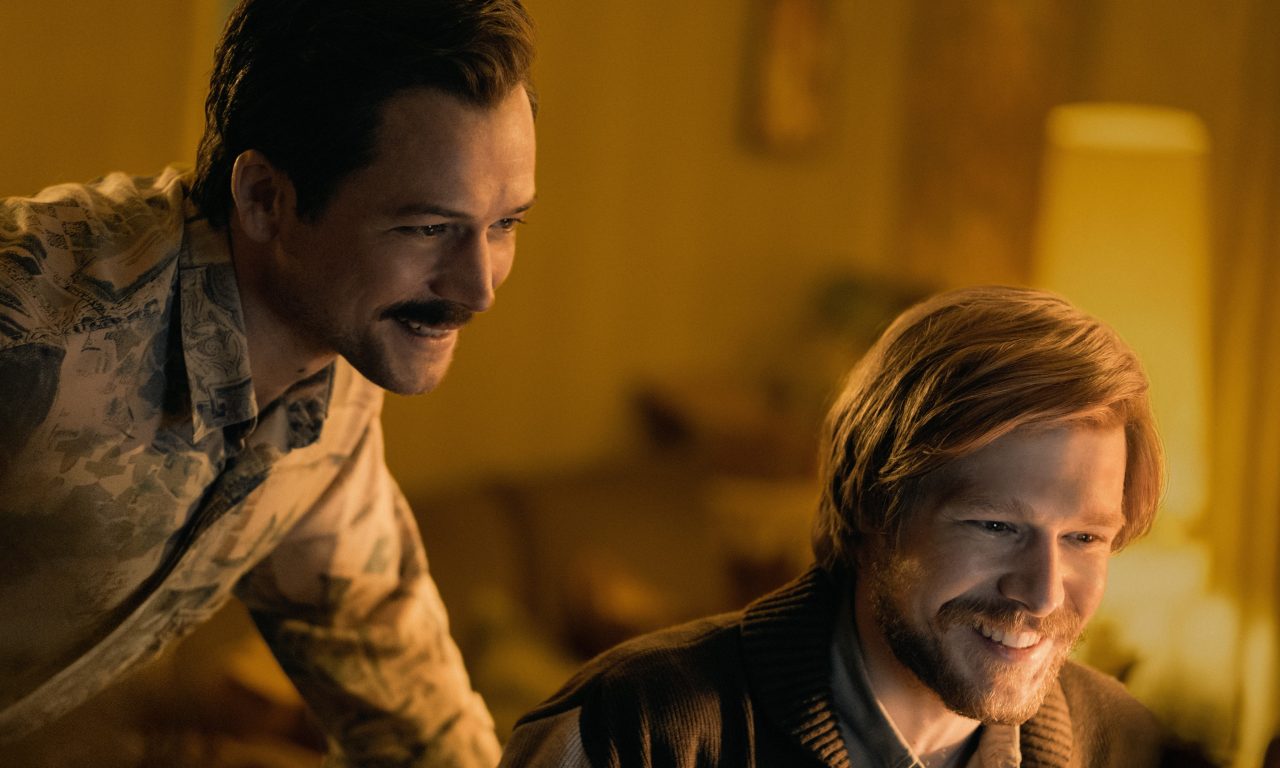
The primary protagonists of Tetris are Henk Rogers (Taron Egerton), Bullet-Proof Software's founder, CEO, developer, and publisher who's trying to secure the rights to sell Tetris in the United States and Japan; and Alexey Pajitnov (Nikita Efremov), the Russian government employee who created the game in his native Moscow. If Rogers can score this game license on behalf Nintendo and get the foreign puzzle game packaged with the Game Boy, he'll secure a future for him and his family while getting Pajitnov the fame Rogers feels he deserves.

As a kid who grew up playing Tetris, I remember boasting to my parents, "The Nintendo is so popular, even Russia is making games for it!" As I've since learned from poring over many books of video game lore, and as this movie underscores, nothing could've been further from the truth. Stymieing Rogers' efforts to collaborate with Pajitnov is the Iron Curtain: the year is 1989, and Soviet Russia, though faltering, is still a force to be reckoned with. Rogers arrives in Moscow to find his motives questioned, his life threatened, competitors underfoot, and cultural and linguistic barriers obscuring who, if anybody, actually owns the Tetris license.
Action!
Despite the movie's title, the star of Tetris is not the game or its creator, but Rogers. Egerton brings such infectious optimism and sincerity to the role that it's easy to root for this underdog as he goes up against both Communism and his better-funded competitors. When other publishers offer multi-million deals for Tetris, it's just a drop in the bucket for their empires; when Rogers counters with a lowball offer, he's putting everything he owns — his business, his reputation, his very home — on the line. And when he attempts to befriend Pajitnov, it's not to get the inside track, but out of a genuine admiration for a fellow software developer — one who's made a game that Rogers himself has become addicted to. As one character describes Rogers: "He's dumb. But he is honest." Which is more than most of us can hope to be.
Balancing that is the cynical Pajitnov, who has lived since birth in the same apartment — the very place he watched his father be dragged from by the Communist Party, never to be seen again. Other than his wife and two sons, Pajitnov trusts almost no one — with good reason, given his background… yet he spends his spare time writing computer games. There is a spark of hope and joy in him that Soviet Russia desperately wants to extinguish. Pajitnov wants to believe in the same things Rogers does, but he's afraid to. Soviet Russian-born Efremov captures all of that and more in his performance.
Then, the last thing Pajitnov expected happens: the two game developers, American and Russian, become friends. As one review said: "[The scene that cements Rogers and Pajitnov's relationship] has more reverence for gaming as both an artistic medium and a way to bring people together in it than the combined runtimes of almost every other game adaptation ever made." Just as my dad and I bonded over Tetris, so too did its creator and its eventual publisher. Tetris starts practically needing a flowchart to keep track of who owns which rights to the Tetris game, but it really takes off when the two heroes bridge their political upbringings and find their chemistry.

Although Tetris is a male-dominated film (as much of the games industry has been and, sadly, continues to be), Sofia Lebedeva turns in a surprisingly diverse and nuanced performance as translator Sasha, who is based on a real person. In smaller parts is Rogers' family: Ayane Nagabuchi plays his wife Akemi, and Kanon Narumi his daughter Maya. Due to Akemi and Maya discussing an upcoming school performance, the film passes the Bechdel test. It's not much, but it's something.
Truthiness
This biopic seamlessly blends fact and fiction. If there can be said to be antagonists in this film, then there are three: the late Robert Maxwell and his son Kevin, actual historical figures who controlled a British media empire until the early 1990s; and Valentin Trifonov, a KGB agent who urges his comrades to deny Communist Russia's decline while simultaneously seeking personal gain from the Maxwells' capitalistic overtures. Although there was an actual Russian politician named Valentin Trifonov, he died in 1938; the movie's Cold War character is an unrelated fabrication.
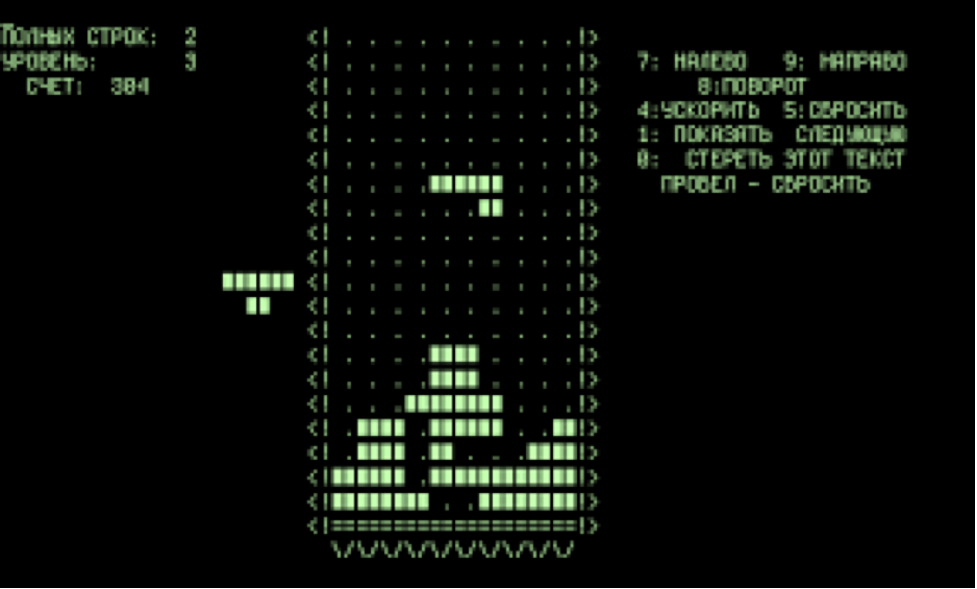
Some dramatizations are understandable; as one website put it, "Basically, how do you liven up what were essentially boardroom discussions?" But even when the movie veers from the truth, it still has an important stamp of approval. Tetris creator Alexey Pajitnov's IMDb credits include producer on two titles with the same name: Tetris, the 1984 computer game; and Tetris, the 2023 movie.
Yet an exhaustive fact check confirms that, other than Trifonov's presence and a climactic car chase scene, the movie is surprisingly accurate. The high-stakes negotiations, the clandestine meetings, and the most important characters (including Nintendo of Japan's third president Hiroshi Yamauchi, Nintendo of America founding president Minoru Arakawa, Nintendo chairman Howard Lincoln, and Mikhail Gorbachev himself) are in the movie much as they were in real life, and the film ends with a recap of what happened to many of these true characters in later years.
Putting the pieces together
Tetris is a movie I was excited about from the moment it was announced. It's a story I mostly already knew, and not one that I realized needed to be told. But it's a fun film with two talented stars, a cast of colorful characters, a clever soundtrack (including a Russian variation on the Bonnie Tyler classic "Holding Out for a Hero"), subdued yet slick pixelated interstitials, and the occasional moment of Argo-level tension. Like an actual game of Tetris when you're in the zone, everything just fits.
